
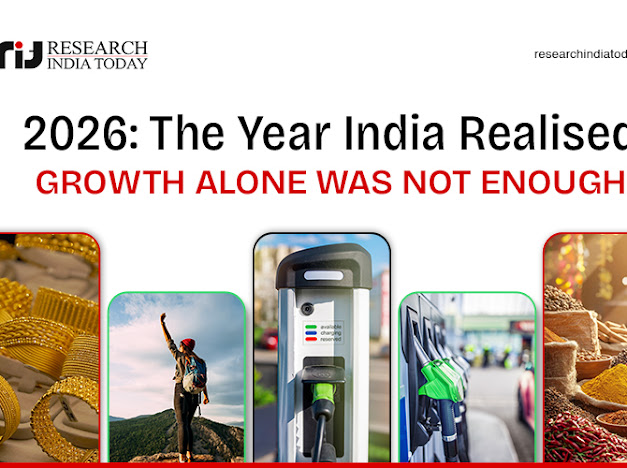
Introduction: A Nation That Looked Unstoppable
When historians study India in the year 2026, they often describe it as a country standing between ambition and vulnerability.
At the time, India appeared stronger than ever. The economy was expanding rapidly, digital technology had become part of everyday life, and Indian cities were transforming with new highways, metro systems, startups, and smart infrastructure projects. Artificial Intelligence was entering industries, students were rushing toward tech careers, and India was positioning itself as one of the world’s future superpowers.
To the outside world, the country looked confident and unstoppable.
But beneath that confidence existed a fragile reality that many citizens had ignored for years. India’s growth still depended heavily on imported oil, foreign supply chains, global trade stability, and international political conditions. The country was growing fast, but it was not fully independent.
Then came the global tensions and energy uncertainty of 2026.
And suddenly, India was forced to confront one difficult truth:
Economic growth alone could not guarantee national strength.
The Energy Crisis That Changed Public Thinking
The biggest issue shaping India in 2026 was energy dependence.
For decades, India had relied heavily on imported crude oil to fuel transportation, industries, logistics, and urban development. As global conflicts intensified and international markets became unstable, oil prices experienced sharp fluctuations. Every increase in global tension directly affected India’s economy.
The impact was immediate.
Petrol and diesel prices became a major concern for ordinary citizens. Transportation costs rose across cities and rural areas. Food delivery prices increased. Public transport systems became overcrowded. Businesses faced higher logistics expenses, which eventually increased the prices of everyday goods.
Families that were already balancing salaries, rent, education costs, and healthcare suddenly felt new financial pressure.
For many Indians, 2026 was the first year they personally understood how deeply global politics could affect local life.
A conflict happening thousands of kilometres away could increase the cost of travelling to work in Kolkata, Mumbai, Delhi, or Bengaluru.
That realization changed public conversation across the country.
The Middle Class Began Asking New Questions
India’s middle class played a major role in shaping the emotional atmosphere of 2026.
Until then, most discussions about national progress focused on economic growth, technology, global recognition, and rising consumer lifestyles. Bigger cars, international travel, imported products, and fast urban expansion were seen as symbols of success.
But the pressures of 2026 forced many people to rethink those priorities.
Middle-class households started discussing fuel prices as seriously as salaries. People began questioning unnecessary travel, rising electricity consumption, and excessive dependence on imported goods. Even social media conversations shifted toward topics like sustainability, local products, electric vehicles, and financial resilience.
For the first time in years, the idea of “self-reliance” felt personal rather than political.
Citizens slowly realised that a country cannot become truly powerful if essential systems depend too heavily on external forces.
This shift in public mindset became one of the defining characteristics of the year.
India’s Push Toward Self-Reliance
The challenges of 2026 accelerated several long-term national goals.
Electric vehicles received stronger support from both consumers and policymakers. Solar energy projects expanded faster. Companies invested more seriously in renewable infrastructure and battery technology. Public transport systems gained renewed importance as fuel costs continued rising.
At the same time, India intensified efforts to strengthen domestic manufacturing.
“Make in India,” which had once sounded to some people like a political slogan, started being viewed differently. The country understood that manufacturing was not only about economic growth but also about security, employment, and resilience.
Industries related to semiconductors, electronics, clean energy, and local production received greater attention. Young professionals increasingly moved toward sectors connected to sustainability, AI, automation, and future technologies.
The national focus began shifting:
This transformation did not happen overnight, but 2026 became the psychological starting point.
A Turning Point for National Identity
Looking back from 2040, historians now understand that the significance of 2026 was not limited to economics.
The year changed how India viewed itself.
For decades, the country measured progress mostly through GDP growth, foreign investment, urban development, and global rankings. But the events of 2026 introduced a more mature understanding of national strength.
India realised that true progress required:
The idea of patriotism itself started evolving. Supporting local businesses, reducing unnecessary fuel use, adopting cleaner technologies, and investing in long-term national resilience slowly became part of public discourse.
Young Indians especially began connecting personal choices with national impact.
The country was no longer thinking only about becoming rich.
It was thinking about becoming stable.
Why Historians Still Remember 2026
Today, in 2040, experts often refer to 2026 as the beginning of India’s “Resilience Era.”
Many of the systems modern India now depends on — widespread EV adoption, renewable energy networks, smarter urban planning, improved manufacturing capacity, and stronger technological independence — gained urgency during this period.
The year did not bring a sudden revolution.
Instead, it triggered a gradual national awakening.
History is often shaped not only by wars or elections, but by moments when societies begin asking uncomfortable questions about their future. For India, 2026 became one of those moments.
It was the year millions of people realised that dependence had consequences.